
Powder Coating vs. Liquid Coating: Which Finish Is Right for Your Metal Parts?

When a metal component needs a durable, attractive, and reliable finish, one of the first decisions is which coating process to use. The choice often comes down to powder coating vs. liquid coating.
Both processes can provide excellent protection and appearance when the coating system is selected and applied correctly. However, they differ in application, curing requirements, finish characteristics, production efficiency, and suitability for particular parts.
There is no universal winner. The right choice depends on the substrate, part dimensions, operating environment, performance requirements, desired appearance, and production volume.
What Is the Difference Between Powder Coating and Liquid Coating?
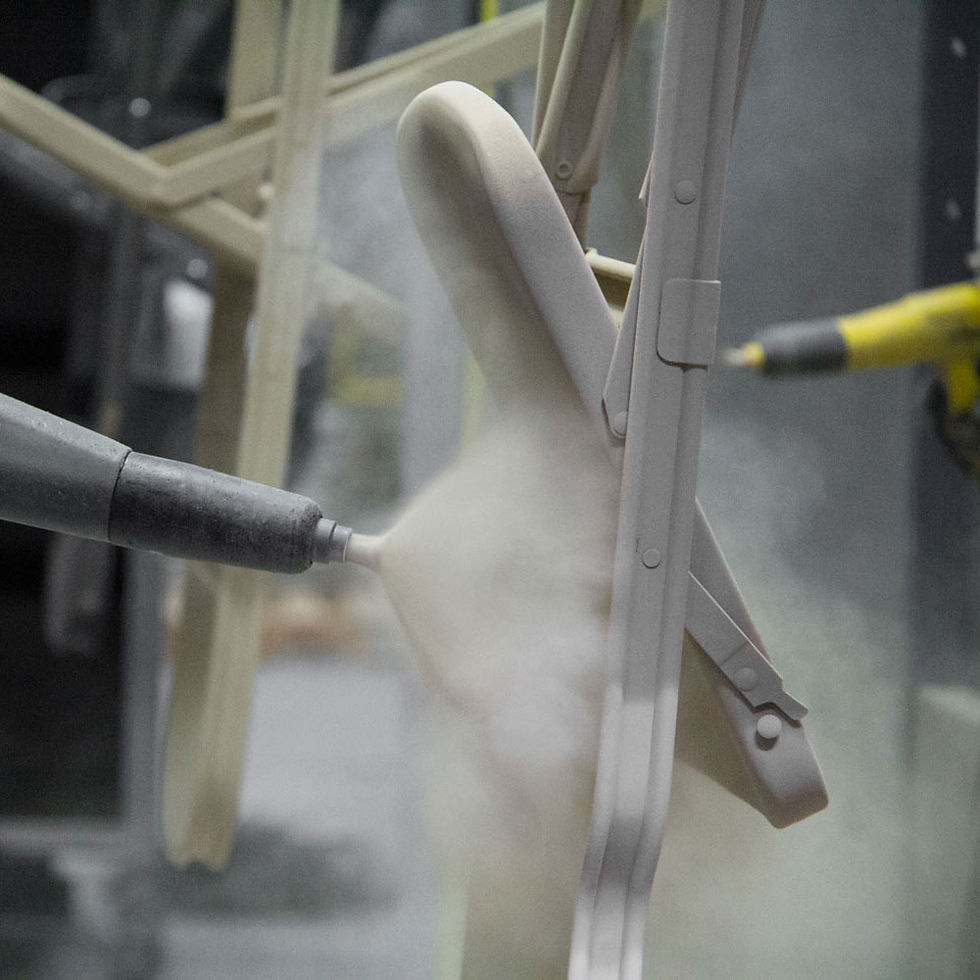
Powder coating is applied as a dry, finely ground material. The powder is electrostatically charged and sprayed onto a properly prepared metal surface. The coated part is then placed in an oven, where heat causes the powder to flow, cure, and form a continuous protective finish.
Liquid coating is applied in a wet form using professional spray equipment. Depending on the coating system, the finish may dry through air exposure, chemical reaction, or controlled curing. Liquid coatings are available in a wide range of specialized formulations for different substrates, environments, and performance requirements.
Both begin with the same essential foundation: proper surface preparation. Even the most advanced coating will struggle to perform if rust, oil, scale, old finishes, or other contaminants remain on the metal.

Powder Coating vs. Liquid Coating at a Glance
Consideration | Powder Coating | Liquid Coating |
Application | Dry powder applied electrostatically | Wet coating applied with spray equipment |
Curing | Typically requires elevated oven temperatures | May air-dry or cure at lower or controlled temperatures, depending on the system |
Typical substrates | Primarily conductive materials, especially metal | Suitable for metal and a broader range of other substrates |
Durability | Excellent resistance to chipping, scratching, fading, and wear when properly specified | Performance varies by formulation; specialized liquid systems can provide excellent protection |
Finish options | Wide range of colors, gloss levels, metallics, hammertones, wrinkles, and textures | Broad selection of colors, effects, film thicknesses, and specialized formulations |
Production | Well suited to repeatable and high-volume metal-part production | Offers flexibility for specialized projects, large assemblies, and parts with unique requirements |
Environmental considerations | Powder itself contains no solvents and produces minimal volatile organic compounds during application | Environmental characteristics depend on whether the system is solvent-based, water-based, or another formulation |
Touch-up and field application | Usually requires controlled shop application and curing | Often more adaptable for touch-ups and applications that cannot be oven-cured |
When Is Powder Coating the Better Choice?
Powder coating is often an excellent choice for metal components that need a tough, uniform finish and can safely withstand the required curing temperature.
Durability and Protection
A properly specified and applied powder coating can provide strong resistance to chipping, scratching, fading, corrosion, and everyday wear. This makes it suitable for automotive components, industrial equipment, architectural metalwork, outdoor products, consumer goods, and many other demanding applications.
The coating chemistry still matters. A finish intended for indoor equipment may not be the right choice for a component exposed to constant UV radiation, moisture, chemicals, or road salt. The powder must be selected for the actual environment in which the part will be used.

Efficient, Repeatable Production
Powder coating works particularly well for repeat production and high-volume manufacturing. Automated conveyor systems can move parts through pretreatment, coating, and curing under controlled conditions.
When manufacturers require consistent color, coverage, film thickness, and performance across a large number of components, a well-controlled powder coating process can provide dependable repeatability.
Colors, Textures, and Specialty Finishes
Powder coatings are available in hundreds of colors and many different appearances, including:
Matte, satin, and high-gloss finishes
Smooth and textured surfaces
Metallic effects
Hammertone finishes
Wrinkle textures
High-temperature formulations
UV-stable outdoor coatings
Protective industrial coatings
Texture can also serve a practical purpose. Certain finishes can help disguise minor substrate irregularities, reduce the visibility of fingerprints, or provide the desired feel and appearance for the finished product.
Reduced Use of Solvents
Powder coatings do not rely on solvents to maintain a liquid state. This means they generally produce minimal volatile organic compounds during application and can support cleaner, more efficient finishing operations.
When Is Liquid Coating the Better Choice?
Powder coating is highly versatile, but it is not appropriate for every component or application. Liquid coating may offer important advantages when heat, size, geometry, film requirements, or specialized performance needs affect the project.
Heat-Sensitive Parts or Assemblies
Powder coating normally requires the entire part to enter a curing oven. Some substrates, assembled components, seals, electronics, adhesives, or other heat-sensitive elements may not tolerate the necessary temperature.
Depending on the formulation, liquid coating may cure at a lower temperature or without requiring the same high-temperature oven cycle.

Large or Difficult-to-Cure Components
A component must fit safely within the available curing equipment for powder coating. Liquid coating can provide an alternative for certain large parts or assemblies that are not practical to place in a powder-coating oven.
The dimensions and weight of the part should therefore be discussed early in the quoting process.
Specialized Performance Requirements
Liquid coatings are available in many specialized chemistries designed for particular environments and operating conditions. They may be selected for specific chemical resistance, temperature exposure, corrosion protection, substrate compatibility, or finish requirements.
High-performance liquid coatings can be highly durable. The idea that powder coating is always stronger than every liquid coating is too simplistic. Actual performance depends on the coating chemistry, pretreatment process, application quality, film thickness, curing, and service environment.
Thin Films and Specific Visual Effects
Some projects require a thinner coating film, a very particular appearance, or a finish that is easier to blend or touch up. Liquid coating can provide additional flexibility for these situations.
It may also be appropriate when an exact specification calls for a particular liquid coating product or system.
Factors to Consider Before Choosing a Coating
When comparing powder coating vs. liquid coating for a specific project, consider more than color and initial appearance.
What Is the Substrate?
The base material affects surface preparation, adhesion, curing, and coating selection. Steel, aluminum, galvanized metal, castings, and previously finished parts may require different preparation and coating systems.
Where Will the Part Be Used?
A component used inside a climate-controlled facility faces different conditions than an outdoor railing, automotive bracket, industrial enclosure, or recreational product.
Important exposures may include:
Moisture and humidity
Sunlight and UV radiation
Road salt
Chemicals or cleaning agents
Abrasion and impact
High or fluctuating temperatures
Continuous handling and wear
Can the Part Tolerate Oven Curing?
The entire component—not just the metal—must be considered. An assembly containing heat-sensitive materials may require a different process than a bare fabricated part.
What Are the Part’s Dimensions and Geometry?
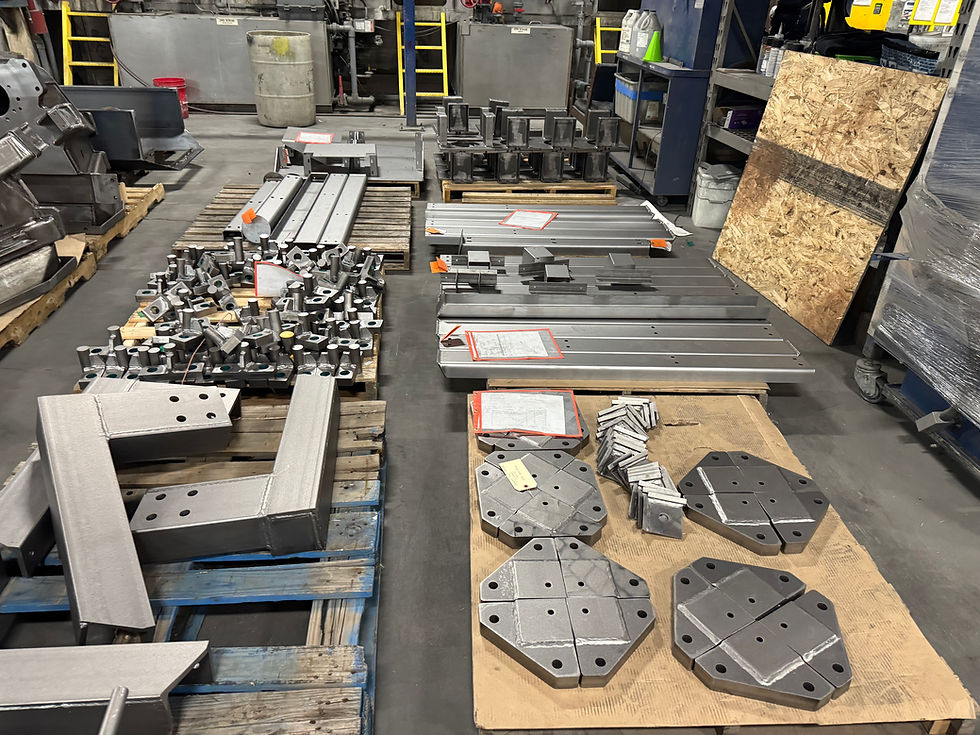
Size, weight, recessed areas, tight corners, hanging points, drainage, and masking requirements can all influence the application process.
Part geometry may also create areas where coating coverage is more difficult. Reviewing drawings or sample parts early can help identify potential challenges.
Are There Critical Tolerances?
Coating adds measurable thickness to a surface. Threads, mating surfaces, grounding points, bearing locations, and other tight-tolerance areas may need to be plugged or masked before coating.
What Production Volume Is Required?
A one-time custom assembly and a recurring order involving thousands of components may benefit from different coating and handling strategies. Production volume can affect racking, masking, line configuration, color selection, packaging, scheduling, and overall efficiency.
Surface Preparation and Process Control Matter Either Way
Choosing the right coating is only part of achieving a successful finish.
Long-term performance depends heavily on cleaning and pretreatment, controlled application, proper curing or drying, and final inspection. If contamination remains on the surface or the coating is applied or cured incorrectly, even a high-quality product can fail prematurely.
Powder Coatings of Utah uses sandblasting, chemical stripping, burn-off, reverse-osmosis water treatment, and a five-stage automated wash system to prepare parts for coating. Application and curing are supported by automated conveyor and batch systems, professional powder spray equipment, and a climate-controlled liquid paint booth.
Finished parts are inspected and tested for characteristics such as film thickness, adhesion, cure completeness, gloss, chemical resistance, and corrosion performance according to the project’s requirements.
Let the Application Determine the Finish
The powder coating vs. liquid coating decision should begin with the part’s real requirements.
Powder coating may be the best option for durable, repeatable finishing of metal components that can tolerate oven curing. Liquid coating may be more appropriate for heat-sensitive parts, large assemblies, specialized specifications, or projects requiring a particular coating chemistry or visual result.
Because Powder Coatings of Utah offers powder coating, liquid coating, surface preparation, custom color matching, specialty finishes, protective coatings, and quality testing, our team can evaluate the complete project rather than forcing every part into the same process.
Not sure which coating is right for your parts? Tell us about the substrate, dimensions, operating environment, quantity, and performance requirements. We’ll help you identify the most appropriate finishing solution.
Call: (801) 866-1300
Email: info@pcofutah.com
Request a Quote: https://www.pcofutah.com/contact


Comments